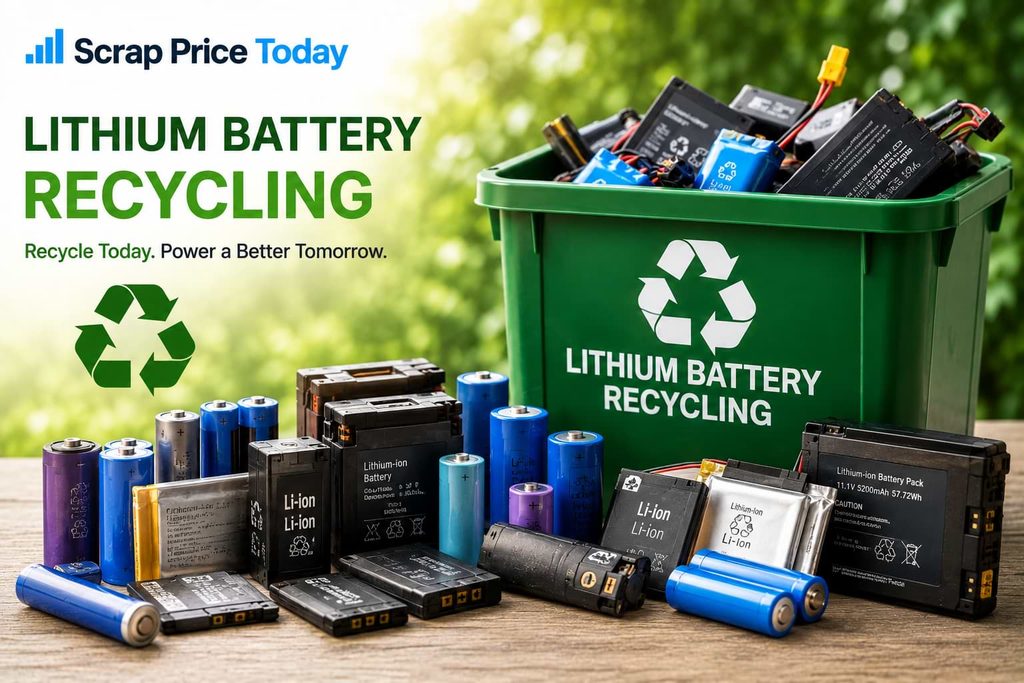
Lithium battery disposal starts with an identification, because the word covers three different objects with three different rules. Rechargeable lithium-ion cells from phones and tools go taped and bagged to retail battery boxes. Non-rechargeable lithium metal cells, the CR-marked coins and camera batteries, go to the same boxes but must never be charged or punctured on the way. And the big packs from e-bikes and scooters go only to dealer or manufacturer take-back, never a drop-off box, never a bin.
Get the identification right and every rule that follows is short.
First, identify which lithium you are holding
| Lithium-ion rechargeable | Lithium metal primary | Micromobility pack | |
|---|---|---|---|
| Measurement | How to recognise each type and what it demands | Same | Same |
| Recharges? | Yes, that is its job | Never, and trying is a fire | Yes, hundreds of cycles |
| Where found | Phones, laptops, tools, earbuds, 18650 cells | CR2032 coins, CR123 camera cells, AA lithium | E-bikes, scooters, hoverboards |
| Markings | Li-ion, ICR, INR, mAh ratings | CR prefix, lithium metal, 3V | UL 2271 or 2849 mark, watt-hours |
| Main hazard | Thermal runaway when damaged | Water-reactive metal, swallowing risk on coins | Scale: a house fire, not a bin fire |
| Destination | Retail box, taped and bagged | Retail box, both faces taped | Dealer or manufacturer take-back only |
One memory hook does most of the work: CR means it never charges. A charger pushed onto a lithium metal cell is a fire on a bench, which is why mixed battery drawers cause more trouble than either chemistry alone.
Route by type
Small rechargeables. Terminals taped, each battery in its own bag, into a retail collection box. A swollen or damaged cell skips the box entirely: sand or kitty litter in a metal container, then household hazardous waste, as the battery pillar sets out.
Lithium metal primaries. Same boxes accept them, with tape on both faces of every coin cell, which also guards the child-swallowing hazard that makes these cells an emergency of their own. Camera CR123s tape like any cylinder.
E-bike and scooter packs. These are hundreds of phone batteries in one case, and no household route is licensed for them. The dealer who sold the bike, the manufacturer’s programme, or a dedicated e-bike battery scheme are the only doors. A pack that has been dropped, soaked or swollen should not come indoors while it waits.
Devices with batteries sealed inside follow the electronics routes on our electronics hub, and vapes remain their own regulatory island, covered on the vape page.
The fire, and what actually happens in one
Thermal runaway is a chain, not a spark: a damaged cell heats, the heat breaks down its neighbour, and the cascade feeds itself while venting flammable electrolyte. That is why a crushed cell in a truck ignites minutes later, and why the rule is prevention, because interruption is hard.
Two details from fire services are worth carrying:
- Water is correct for lithium-ion. Cooling the cascade is the whole game, and aviation crews are trained to douse a burning device with water or any non-flammable liquid.
- Lithium metal is different. The metal itself reacts with water, which is why primary-cell fires are the one place specialist extinguishers earn their keep. In a household, the practical version is simpler: never charge, crush or burn a CR cell, and the fire never starts.
What New York just proved
The strongest recent evidence on lithium safety is a natural experiment running in one city.
- The fire department logged 268 lithium battery fires in the peak year, more than five a week, with 18 deaths.
- The city then banned the sale, lease or rental of e-bikes, scooters and packs without third-party certification, the battery standard being UL 2271 and the whole-bike system UL 2849, and the state extended the requirement statewide the following summer.
- Fires stayed roughly flat the next year at 277. Deaths fell to six, then to one the year after.
Read those two lines together, because the gap between them is the finding: the certified stock did not stop failing, it stopped failing violently. Analyses of the fire record consistently point at uncertified imports, re-wrapped cells, mismatched chargers and amateur repairs as the concentration of the danger, and a federal stop-use warning against one brand’s packs this year shows the problem is policed, not solved.
Two practical notes ride along. A certification mark on packaging is a starting point rather than proof, since counterfeit marks circulate on imported packs. And the behaviours the fire service pairs with the law are free: charge with the matched charger, never overnight, never between you and the door, and retire any pack that has swollen, smelled hot or been underwater.
Flying with them
- Spare batteries and power banks travel in the cabin only, never checked, terminals taped or in original packaging.
- Up to 100 watt-hours flies freely; 101 to 160 needs airline approval; bigger stays home, which rules out most e-bike packs.
- Devices with installed batteries are fine either way, though cabin is preferred.
- The watt-hour figure is printed on the pack, and the maths is volts times amp-hours where it is not.
Questions people actually ask
Can I put lithium batteries in the recycling bin if they are dead? No, and dead is the misleading word: a cell too flat to run a phone still holds enough energy to ignite under a compactor. Every lithium battery uses a drop-off route.
Do I need to discharge a battery before recycling? No. Tape and bag it as it is. Deliberately running cells down, or worse, saltwater baths from old internet advice, damages them and adds risk.
My coin cell drawer has loose CR2032s. How urgent is tape? Very, twice over: shorting risk against keys and coins, and the swallowing hazard that makes loose coins the most dangerous battery in a house with children.
Who takes an old hoverboard battery? The maker or an e-bike battery scheme. If the brand is gone, household hazardous waste will advise; a big orphan pack is the one item worth a phone call first.
Common mistakes
- Charging a CR-marked cell, the mistake the naming exists to prevent.
- Checking spare power banks into hold luggage.
- Binning a flat cell because flat reads as safe.
- Storing a swollen pack indoors while deciding what to do.
- Buying the cheap unbranded replacement pack, where the missing money is usually the missing battery management system.
- Saltwater discharge folklore from old forum advice.
- Mixing loose coins and keys in the same drawer or pocket.
Where this fits
The drop-off network and taping rules for every chemistry sit on the battery disposal pillar, the sealed-device problem is on the vape page, the facility fire record runs through how to recycle electronics, and the market that makes recovered lithium worth chasing is on lithium battery scrap.
Frequently asked questions
How do I dispose of lithium batteries?
Identify the type first. Rechargeable lithium-ion cells go taped and individually bagged to retail battery boxes. CR-marked lithium metal cells go to the same boxes with both faces taped. E-bike and scooter packs go only to dealer or manufacturer take-back.
What is the difference between lithium-ion and lithium metal batteries?
Lithium-ion recharges and powers phones, tools and laptops. Lithium metal never recharges, carries a CR prefix on coins and camera cells, and contains water-reactive metal. Charging a lithium metal cell causes a fire, which is what the CR naming exists to prevent.
Can dead lithium batteries go in the trash or recycling bin?
Never. A cell too flat to run a device still holds enough energy to ignite when crushed, and thermal runaway is a self-feeding cascade once it starts. Every lithium battery, however dead, uses a drop-off route.
Should I discharge batteries before recycling them?
No. Tape the terminals and bag each battery as it is. Deliberate discharge adds handling for no benefit, and the old saltwater-bath folklore damages cells and adds risk rather than removing it.
What do I do with a swollen battery?
Keep it out of every drop-off box. Stand it in sand or kitty litter in a metal container away from anything flammable, do not press or puncture it, and take it to household hazardous waste. A swollen e-bike pack additionally should not wait indoors.
Where do e-bike and scooter batteries go?
Only to the dealer, the manufacturer's programme or a dedicated e-bike battery scheme. A pack is hundreds of cells in one case, no household box is licensed for it, and an orphan pack from a dead brand is worth a call to hazardous waste services first.
Did the New York certification law actually work?
On deaths, dramatically. Fires stayed roughly flat, 268 then 277 a year, while deaths fell from 18 to six to one after sales of uncertified e-bikes and packs were banned. The certified stock kept failing but stopped failing violently.
What should I check before buying a replacement pack?
A genuine UL 2271 or 2849 certification mark, the matched charger, and current federal recall notices, since a stop-use warning was issued against one brand's packs this year. Counterfeit marks circulate, so an implausible price is itself a warning.
Can I fly with lithium batteries?
Spares and power banks in the cabin only, terminals taped, up to 100 watt-hours freely and 160 with airline approval. Installed batteries in devices are fine. E-bike packs exceed the limits and stay home.
Does water put out a lithium battery fire?
For lithium-ion, yes: cooling the cascade is the point, and aircraft crews are trained to douse burning devices with water. Lithium metal reacts with water, which is why the household rule for CR cells is prevention: never charge, crush or burn one.