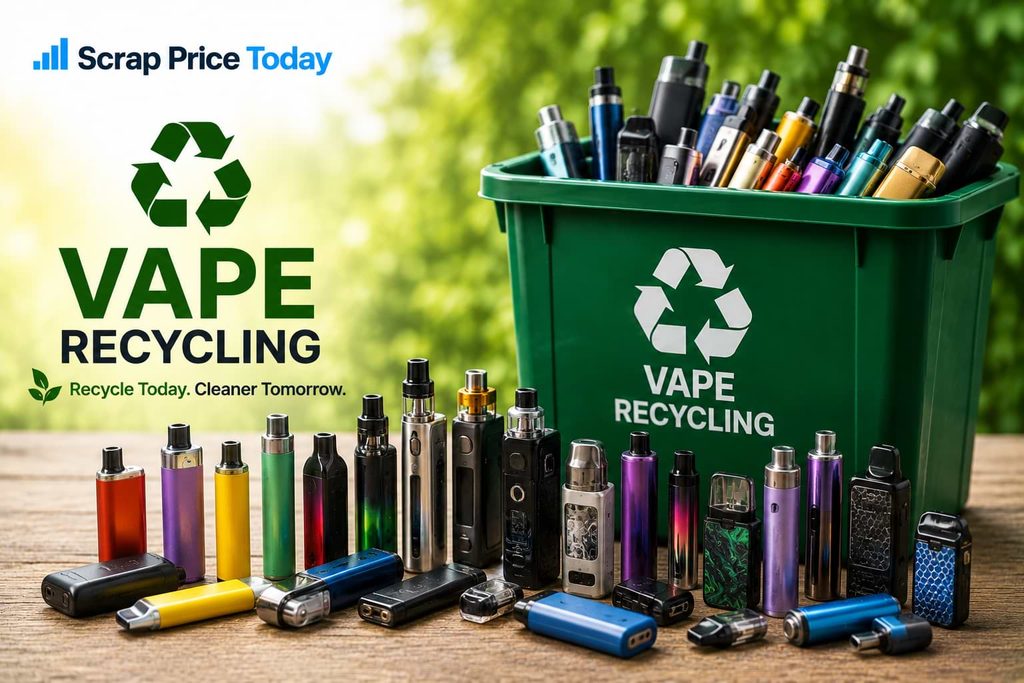
A disposable vape is the only mass consumer product that no bin can legally take. Federal rules class the nicotine residue as acute hazardous waste even when the device is completely empty, the lithium battery makes it ignitable and reactive waste on top, and the sealed casing means the two hazards cannot be separated. Trash is illegal, the recycling bin is worse, and most battery drop-off boxes refuse them. For a household, hazardous waste collection is the compliant route, and the few take-back schemes that exist are the better one.
Every other page in this cluster ends with a working destination. This one is about a product designed so that no destination works.
Every route, and why it fails
| Route | What happens | Verdict |
|---|---|---|
| Measurement | Where each disposal path leads for a sealed disposable vape | |
| Household trash | Acute hazardous waste in municipal waste, plus a crushable lithium cell | Illegal, and a fire start |
| Recycling bin | Same two hazards, straight into a sorting plant | The worst option available |
| Retail battery box | Boxes accept batteries, not nicotine containers | Usually refused |
| Sewer or drain | Liquid nicotine to wastewater | Explicitly prohibited |
| Vape shop take-back | A handful of schemes exist | Best where offered |
| Household hazardous waste | Licensed handling of both hazards | The reliable answer |
Two hazards, permanently attached
The nicotine is the half people underestimate. Regulators class nicotine as an acute hazardous waste, and the classification follows the container: state guidance is explicit that the residue inside a cartridge keeps that status even when the device is empty and fully used. Poisonings and deaths from e-liquid ingestion are the reason the listing exists.
The battery is the half this whole cluster knows. A lithium cell crushed in a truck or plant short-circuits and ignites, so a sealed vape also designates as ignitable and reactive waste.
Approved nicotine gum and patches were carved out of the hazardous listing years ago. Vapes were explicitly not, eleven states never adopted even that carve-out, and regulators have stated that a future approval would not automatically exempt them either.
The design detail that locks it all together: a disposable is a sealed unit. Facility guidance instructs that where a battery cannot be detached, the entire device is handled as acute hazardous waste, stored in labelled containers and moved only by licensed transporters, and never crushed or punctured on the way.
The absurd arithmetic for schools
Acute hazardous waste carries a very low threshold: 2.2 pounds a month tips a generator into the strictest category.
Regulatory guidance works that through for vapes: somewhere between 76 and 1,000 full devices can cross the line, depending on size. A school confiscating a box of vapes a term, or a shop taking returns, can find itself in the same generator category as a chemical plant.
Regulators’ own presentations are candid about the consequence: the multiple hazards mean high end-of-life costs, those costs discourage anyone from collecting vapes at all, and where collection happens, the bill lands on municipalities and schools least equipped to pay it. That is the official diagnosis of why take-back is so rare, in the collectors’ own words.
What is being thrown away
The scale makes the design decision expensive.
- Well over a billion disposable vapes are sold in the US in a year.
- UK campaigners counted around five million discarded a week before their ban, roughly eight every second.
- The lithium binned in UK vapes alone was estimated at ten tonnes a year, enough for over a thousand electric car batteries.
- Each device also carries copper, aluminium and a circuit board, all engineered to be unrecoverable at speed.
- Facility operators report pulling hundreds of loose lithium cells a day from incoming waste, vapes prominent among them, feeding the fire record covered on our electronics hub.
The bans, and the loophole
The UK banned the sale of disposable vapes from the start of last June, with Belgium and France moving in the same direction, precisely because the waste stream had no answer.
The aftermath is instructive. Sales shifted substantially to near-identical models sold as rechargeable and refillable, which satisfy the letter of the ban while being priced and marketed to the same single-use habit. Early monitoring suggests many are discarded exactly as the disposables were.
The lesson matches the aluminium cup story on our cups page: a product’s fate is set by how it is used, not how it is labelled. A ban on a label moves slower than a habit.
What to actually do
- Use a take-back scheme if any shop near you runs one. They exist patchily, and they are the only route built for the product.
- Otherwise, household hazardous waste. Municipal HHW sites and events accept vapes, and this is the answer regulators themselves give households.
- Store them safely meanwhile: a rigid tub, not crushed, not punctured, away from heat, terminals of any loose batteries taped.
- Never the drain for any e-liquid, and never any bin for any part.
- If you vape ongoing, switch to a genuinely refillable device. One rechargeable unit with pods or liquid removes dozens of hazardous waste items a year from the question entirely.
- Schools and businesses cannot use any of the household routes: collected vapes are regulated waste requiring licensed disposal, and the 76-device arithmetic above is the reason to get advice early.
Questions people actually ask
Can I put an empty vape in the battery box at the supermarket? Usually no. The box is licensed for batteries, and an empty vape still counts as a nicotine container under the hazardous waste rules, which is exactly why boxes refuse them.
Is one vape in the trash really a problem? It is illegal under the waste rules, and it is one more lithium cell heading for a compactor. The fires that closed sorting plants started with single cells.
Why will nobody take these when every battery has a drop-off? Because a vape is a battery plus regulated nicotine in one sealed body. The battery system cannot touch the nicotine, the pharmacy system cannot touch the battery, and regulators say the handling cost scares off everyone else.
Do zero-nicotine vapes escape the rules? The battery hazards remain in full, and mixed collections are handled to the strictest content. Treat them identically.
Common mistakes
- Binning empties on the logic that used up means harmless. The classification survives emptiness.
- Crushing or puncturing a dead device, the one reliable way to start the fire yourself.
- Dropping vapes in retail battery boxes, where they make the collector an unlicensed hazmat handler.
- Pouring leftover liquid down a sink, explicitly prohibited everywhere.
- A school office drawer of confiscated vapes, which is an unpermitted hazardous waste store.
- Buying the big-puff rechargeable and using it once, the loophole product with the disposable’s fate.
Where this fits
The fire record vapes feed at sorting plants is documented on how to recycle electronics, the drop-off system for every ordinary battery is on the battery disposal pillar, and the lithium market that makes the binned metal an economic loss as well as a hazard is on lithium battery scrap.
Frequently asked questions
How do I dispose of a vape?
Through a shop take-back scheme where one exists, otherwise household hazardous waste collection. No bin is legal: the nicotine residue is acute hazardous waste even in an empty device, the lithium cell is ignitable waste, and the sealed casing keeps the two together.
Why can vapes not go in the trash?
Two federal hazard classifications at once. Nicotine is acute hazardous waste, a status the residue keeps even when the device is fully used, and the lithium battery designates the sealed unit as ignitable and reactive on top. Trash fails both rules.
Can empty vapes go in battery drop-off boxes?
Usually not. The boxes are licensed for batteries, and an empty vape still counts as a nicotine container under hazardous waste rules, so accepting one would make the collector an unlicensed hazardous waste handler. A few dedicated vape schemes exist instead.
Is an empty vape really still hazardous?
Under the rules, yes. State guidance is explicit that cartridge residue keeps its acute hazardous classification even when the device is empty and fully used, and the battery hazards never depended on the liquid at all.
What should schools do with confiscated vapes?
Get advice before storing them, because the thresholds are absurdly low: regulatory guidance calculates that 76 to 1,000 full devices can push a generator into the strictest hazardous waste category. A drawer of confiscations is an unpermitted hazardous waste store.
Why are there so few vape take-back schemes?
Regulators' own presentations say it plainly: the double hazard makes end-of-life handling expensive, the expense discourages anyone from collecting, and where collection happens the cost lands on municipalities and schools. The product's design created its own orphan status.
How much metal is wasted in disposable vapes?
UK estimates before the ban put the binned lithium alone at ten tonnes a year, enough for over a thousand electric car batteries, from roughly five million devices discarded weekly. Each unit also carries copper, aluminium and a circuit board built to be unrecoverable.
Did banning disposables solve the problem?
Partly at best. After the UK ban, sales shifted to near-identical models labelled rechargeable and refillable, priced to the same single-use habit, and early monitoring suggests many are discarded the same way. A ban on a label moves slower than a habit.
What do I do with leftover e-liquid?
Never the drain or any bin, both explicitly prohibited. Sealed bottles and pods go with the device to hazardous waste collection, and zero-nicotine liquid is handled identically because collections are managed to the strictest content.
What is the safest way to store dead vapes before drop-off?
A rigid tub away from heat, devices uncrushed and unpunctured, with any loose batteries taped. Puncturing a lithium cell is the one reliable way to start the fire yourself, and a hot car in summer is the storage mistake that finds it.