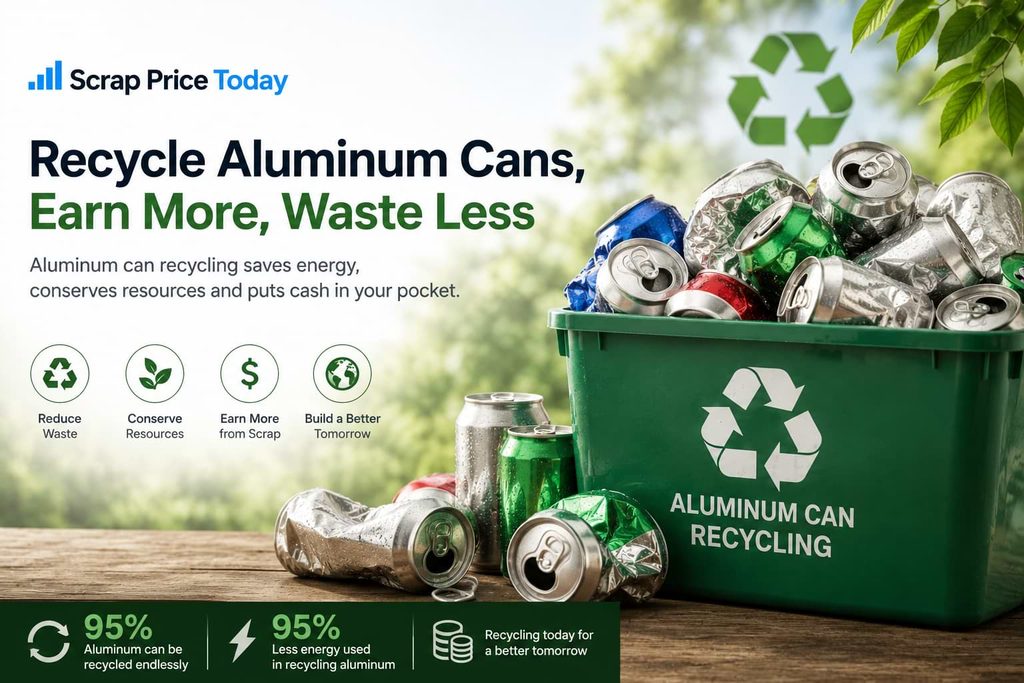
The aluminium can is recycling’s poster child, and the famous numbers about it are mostly true with asterisks the folklore drops. It is the most recycled drinks container in America, at a rate that is nonetheless the lowest in decades. It can be back on a shelf in 60 days, a phrase the industry itself qualifies with as little as. And it is genuinely the most valuable thing in a household bin, which makes the roughly $1.2 billion of cans landfilled every year the strangest waste in the whole system.
This page audits the five claims everyone repeats, against the can industry’s own published ledger.
Claim one: the most recycled drinks container
Verdict: true, and at its lowest point in decades.
The industry’s latest survey puts the US aluminium can recycling rate at 43 percent, against 39.6 for glass and about 20 for plastic bottles. The can wins the comparison every year.
The asterisk is the trend. The rate has averaged around 52 percent since tracking began, sat near 42 for three recent years, and the newest figure is described by the trade bodies themselves as the lowest point in decades, worse than peer countries. Winning a race everyone is losing is the honest summary.
Scale makes both halves vivid: about 90,000 cans are recycled every minute in the United States, and more cans than that are thrown away.
Claim two: back on the shelf in 60 days
Verdict: true as the industry states it, narrower than the version people repeat.
The actual published claim is that 93 percent of recycled cans go from the bin back to a shelf as a new can in as little as 60 days. Two qualifiers matter: the 93 percent applies to cans that get recycled at all, and as little as marks a best case, not an average.
What the folklore gets right is the loop itself. The industry’s closed-loop circularity figure, the share of recycled can metal that becomes can again rather than something lesser, is 96.7 percent, against about a third for glass. Can-to-can is real, which is precisely why every can that misses the bin is a genuine loss rather than a rounding error.
Claim three: recycling a can saves 95 percent of the energy
Verdict: right neighbourhood, and the metric matters.
The canonical 95 percent is an energy figure for recycled versus primary aluminium, and it holds up. The industry’s own releases about the can quote the greenhouse gas version at 80 percent less in one document and more than 90 percent less in another, which tells you the honest range across metrics and assumptions.
Any of those numbers justifies the habit. The gap between them is a reminder that a single dramatic percentage is usually a family of related measurements wearing one coat, the same lesson our recycling numbers page teaches about symbols.
Claim four: cans are made of recycled cans
Verdict: mostly, and the number just moved the wrong way.
The average US can now contains 71 percent recycled content, down from the 73 the industry reported previously, against roughly 23 percent for glass bottles and 3 to 10 for plastic. No other drinks container is close.
The two-point slip has a supply-side cause worth understanding: recycled content is capped by how many used cans come back. A 43 percent collection rate physically cannot feed a much higher recycled share, which chains this claim directly to claim one. The ceiling on the can’s best number is set at the kerb.
Claim five: the most valuable thing in the bin
Verdict: emphatically true, and the ledger’s strangest line follows from it.
By the industry’s figures, aluminium packaging is about 3 percent of the weight of a household’s recyclables and nearly 30 percent of their economic value. Nothing else in the bin approaches that ratio, which is why sorting plants keep retrofitting machines to catch escaped cans, as our metal recycling guide shows in detail.
The consequence: Americans recycled about 46 billion cans in the latest counted year and threw away more than 61 billion, around fifteen twelve-packs per person, worth approaching $1.2 billion of metal landfilled annually. A single can holds about 2.4 cents of aluminium at today’s board price, and sixty-one billion of anything adds up.
The number the industry flags itself
The can makers set public targets: 70 percent recycling by 2030, 80 by 2040, 90 by 2050. Their newest report says the first target is unachievable under current US recycling systems and policies.
That is unusual candour, and the diagnosis attached to it matches everything this site finds elsewhere: the fundamentals have not changed. The same report’s preferred fix is the one with three decades of evidence behind it, deposit return systems, where ten-cent states collect eighty to ninety percent of containers while the national kerbside average sits in the low forties, exactly the gradient our bottle deposit analysis documents state by state.
So the audit ends where policy begins. Every claim above is true enough; the system that would make them add up to a circular can is the missing piece.
What you control
- Every can in the bin, whole and empty. The machinery catches whole cans at 97 percent; crushed ones slip the screens.
- In a deposit state, redeem. Five to ten cents per can beats scrap value thirty-fold.
- Bulk quantities go to a yard. A bag of cans is bin material; a garage full is scrap, priced live on our aluminium can price page.
- Foil and cups ride along under their own rules, balled and whole respectively.
What the metal is worth in twelve markets:
Market Local price USD per lb Market factor Turkey ₺87.64 / kg $0.80 1.04 Germany €1.54 / kg $0.79 1.02 United States $0.77 / lb $0.77 1.00 China CN¥11.13 / kg $0.75 0.98 Canada C$1.05 / lb $0.75 0.97 United Kingdom £1.22 / kg $0.74 0.96 Australia A$2.30 / kg $0.73 0.95 United Arab Emirates AED5.92 / kg $0.73 0.95 Saudi Arabia SAR5.92 / kg $0.72 0.93 India ₹148 / kg $0.71 0.92 Bangladesh ৳185 / kg $0.68 0.88 South Africa R23.63 / kg $0.65 0.85
Where this fits
How the sorting machines capture aluminium is on can you recycle metal, the deposit-state arithmetic is in recycling plastic bottles for cash, and what a can is worth as scrap, hour by hour, is on aluminium can prices.
How we produced this
Every figure in the audit comes from the can and aluminium trade associations’ published recycling reports, KPI documents and releases, including the recycling rate series, recycled content survey, circularity figure, container comparisons, landfill value and the targets assessment. These are industry sources auditing their own product; where their own documents disagree, as with the emissions saving, we quote the spread rather than choosing the flattering end.
The judgment that deposit systems explain the gap between American and peer-country rates is supported by the state-level redemption data cited on our bottle deposit page, and it is also the industry’s own stated position.
The per-can metal value is calculated from our live board price and refreshes daily.
Frequently asked questions
What percentage of aluminum cans are recycled?
About 43 percent in the United States by the industry's latest survey, the highest of any drinks container but the lowest can rate in decades, against a 52 percent average since tracking began. Ten-cent deposit states collect eighty to ninety percent of theirs.
Is a recycled can really back on the shelf in 60 days?
The industry's actual claim is that 93 percent of recycled cans return as new cans in as little as 60 days. It is a best case rather than an average, but the loop is real: 96.7 percent of recycled can metal becomes can again rather than a lesser product.
How much energy does recycling a can save?
The canonical figure is 95 percent versus primary aluminium as an energy measure. The industry's own releases quote the greenhouse gas version at 80 percent less in one document and more than 90 in another, so the honest answer is a range, all of it large.
How much recycled metal is in a new can?
About 71 percent on average in the US, down from 73, against roughly 23 percent for glass and 3 to 10 for plastic bottles. The ceiling is set by collection: a 43 percent return rate physically limits how much used can metal exists to put in new cans.
Why are cans called the most valuable thing in the bin?
Industry figures put aluminium packaging at about 3 percent of a household's recycling by weight and nearly 30 percent of its economic value. That ratio is why sorting plants keep adding machines specifically to catch cans that slip through.
How many cans get thrown away?
More than are recycled: about 61 billion landfilled against 46 billion recycled in the latest counted year, roughly fifteen twelve-packs per person, worth approaching $1.2 billion of metal. Each can holds a few cents of aluminium at board prices.
Will the industry hit its 70 percent target?
Its own report says the 2030 target is unachievable under current US recycling systems and policies, which is unusual candour. The targets stand at 70 percent by 2030, 80 by 2040 and 90 by 2050, and the report points to deposit systems as the proven lever.
Why do deposit states recycle so many more cans?
Because a dime per can changes behaviour where good intentions do not. Ten-cent states collect eighty to ninety percent of containers while the national kerbside average sits in the low forties, the same gradient visible state by state in redemption data.
Should I crush cans before recycling them?
Not for a kerbside bin, where flattened cans slip through the sorting screens and end in glass or residue. Crushing only makes sense for deposit-state redemption by weight or for storing bulk scrap headed to a yard.
When are cans worth taking to a scrap yard?
At volume. A household bag is bin material, but a garage of flattened cans is scrap sold by the pound, and a deposit state beats both at five to ten cents per container. Our aluminium can price page tracks the live per-pound value.