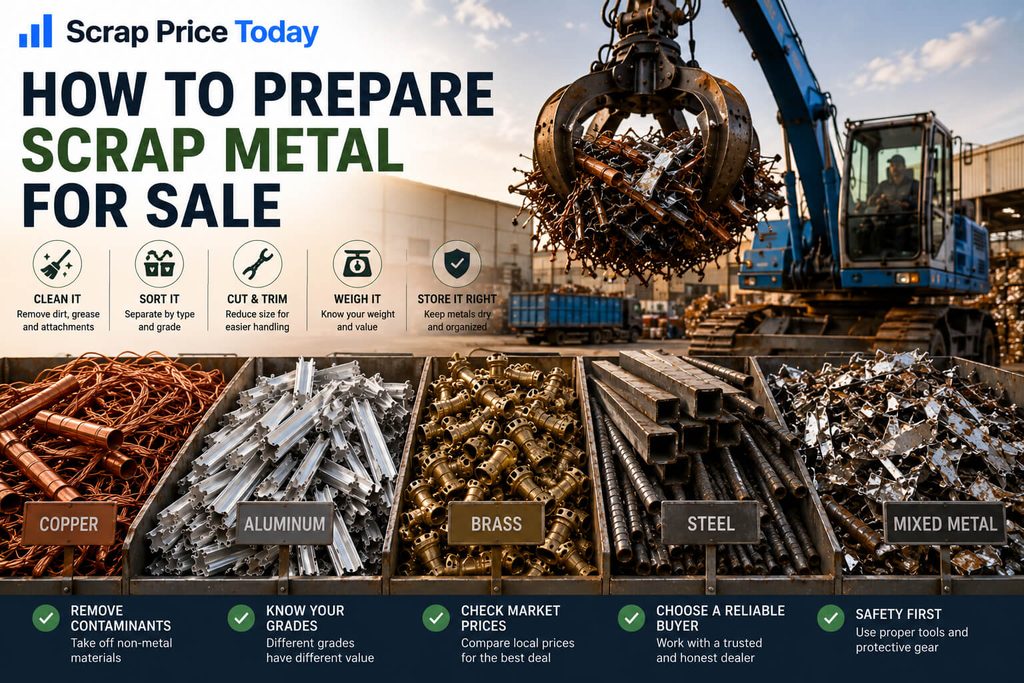
Prepare scrap for sale by sorting it with a magnet, removing the steel, brass and plastic attachments that downgrade a load, cutting steel to the yard’s charge size, draining fluids and keeping material dry, and bringing photo ID plus proof of ownership for vehicles, converters and cable. A prepared load is paid at the top of each grade; a mixed one at the bottom of the lowest.
Scrap Price Today editorial guide, checked against current exchange settlements, recycler grade specifications and mill buying programs. Figures are examples; today’s prices are on the live scrap price board.
The yard grades what it sees, and it sees a load for about a minute. Preparation decides what that minute shows.
Set up before you start
- Bins or bags for copper, brass, aluminum, stainless, lead, heavy steel and light steel.
- A magnet, a file, side cutters, a hacksaw or reciprocating saw and an angle grinder for stubborn joints.
- Gloves, eye protection, toe-capped boots and a mask for grinding.
- A bathroom or luggage scale to check weights against the yard ticket.
Sort with the magnet first
Everything that sticks hard goes to the ferrous side. Everything that does not is sorted by colour and weight into copper, brass, aluminum and lead.
Anything heavy, silver and only slightly magnetic is checked as stainless. The ferrous vs non-ferrous guide explains the exception.
Remove what downgrades a load
- Copper pipe: cut off brass valves, fittings and steel clamps, and cut out soldered joints for number 1 rather than number 2.
- Aluminum frames: remove steel screws, hinges, rollers and plastic thermal breaks.
- Wheels: take off tyres, weights and valve stems.
- Radiators: cut off steel brackets and plastic tanks.
- Wire: strip heavy cable, leave thin cord alone, and keep bare and insulated wire apart.
Cut to the yard’s size
Mills charge scrap of a set size and yards pay less for anything they must shear. Plate and structural steel usually needs to be under about 1.5 by 0.6 metres; ask your yard for its limit.
Cutting a long beam into three pieces at home can move it from a low grade to plate and structural.
Drain and dry
Oil, coolant, water and fuel are deducted as moisture or refused. Drain engines and gearboxes, tip water out of pipe and radiators, and keep cans and turnings under cover.
Sealed containers such as gas cylinders and fire extinguishers are refused everywhere; ask the yard how it wants them handled.
Preparation by item
| Copper pipe | Aluminum frames | Appliances | Vehicles | Batteries | |
|---|---|---|---|---|---|
| Measurement | Sold per lb or kg by grade | Sold per lb or kg, clean or irony | Shell per ton or tonne, parts per lb or kg | Per ton or tonne as shredder feed | Per lb or kg by lead content |
| What to remove | Fittings, clamps, solder joints | Screws, hinges, thermal breaks, glass | Motor, harness, compressor, copper pump | Battery, converter, wheels, radiator | Nothing; sell whole and intact |
| Paperwork | None for household lots | None | Refrigerant recovery tag for cooling units | Title or registration, deregistration where required | None, but keep upright |
| Common deduction | Downgrade to number 2 or brass | Irony aluminum price | Refusal without a refrigerant tag | Non-ferrous parts paid at ferrous price if left on | Leaking or opened units refused |
Appliances and refrigerants
Refrigerators, freezers, air conditioners and dehumidifiers contain refrigerant that must be recovered by a licensed technician before scrapping. Yards ask for a tag or certificate and refuse untagged units in most countries.
After recovery, the compressor, copper tubing and aluminum fins can be sold on the non-ferrous side.
Vehicles, converters and cable
A car needs its title or registration and, in many countries, proof of deregistration. Pull the battery, catalytic converter, aluminum wheels, radiator and any reachable copper wiring before the car goes on the scale.
Copper cable and anything that could have come from infrastructure needs proof of origin. A licensed yard refuses it without one.
Paperwork and payment
Bring photo ID. The United Kingdom, France, Belgium and the Netherlands pay by transfer only; most US and Australian states record ID and pay by cheque for theft-prone items; commercial sellers in India should bring GST details. The country pages list the rules for each market.
At the scale
- Load heavy ferrous first and non-ferrous bins last, so bins can be weighed separately.
- Watch the scale zero and confirm the tare is measured.
- Read the ticket: one line per grade with weight, price and any deduction.
- Photograph the load and the ticket.
- Compare each line with the live board before you accept payment.
Key numbers
- Removing fittings from copper pipe typically moves it from number 2 to number 1, a difference of 5 to 10 percent on the price (Recycled Materials Association grade definitions).
- Aluminum with steel attached is bought as irony aluminum, often at less than half the clean extrusion price (published yard price lists).
- In the United States, refrigerant must be recovered by a certified technician before an appliance is scrapped (US EPA Section 608).
- Moisture and dirt deductions of 2 to 10 percent are common on wet or oily loads; a covered, drained load avoids them (published yard terms).
Questions people ask
Do I really need to cut the fittings off copper pipe?
If you want the number 1 price, yes. Brass fittings and soldered joints drop the pipe to number 2 or to the brass price, and the cut takes seconds per joint on anything over a few kilograms.
Will a yard take my old fridge?
Only after the refrigerant has been recovered by a licensed technician and the unit is tagged. Most yards refuse untagged cooling appliances, so arrange recovery first or use a council collection.
What paperwork do I need to scrap a car?
The title or registration in your name and, in many countries, proof of deregistration. Bring photo ID as well, and expect the yard to record the vehicle identification number.
Common mistakes
- Loading non-ferrous bins under the ferrous so they cannot be weighed separately.
- Bringing a fridge or air conditioner without a refrigerant recovery tag.
- Leaving oil and water in engines, radiators and pipe.
- Cutting cable spools or utility metal without proof of origin.
- Accepting a ticket with one weight and one price for a mixed load.
Sources and further reading
- Recycled Materials Association: grade specifications and charge-size practice
- US EPA Section 608: refrigerant recovery requirements
- UK government scrap metal dealer guidance: identification and payment rules
Related guides
- How to Get the Best Scrap Price: Sorting, stripping, weighing and comparing quotes: the steps that raise a payout.
- Best Metals to Scrap: The metals and items that return the most per pound, and the ones not worth the trip.
- Aluminum Scrap Grades Explained: Cans, extrusion, cast, sheet and wheels: how aluminum is sorted and priced.
Check today’s numbers before you sell: the scrap price board, the price charts, the scrap value calculator and local rates on our scrap prices by country pages.
Frequently asked questions
Do I really need to cut the fittings off copper pipe?
If you want the number 1 price, yes. Brass fittings and soldered joints drop the pipe to number 2 or to the brass price, and the cut takes seconds per joint on anything over a few kilograms.
Will a yard take my old fridge?
Only after the refrigerant has been recovered by a licensed technician and the unit is tagged. Most yards refuse untagged cooling appliances, so arrange recovery first or use a council collection.
What paperwork do I need to scrap a car?
The title or registration in your name and, in many countries, proof of deregistration. Bring photo ID as well, and expect the yard to record the vehicle identification number.