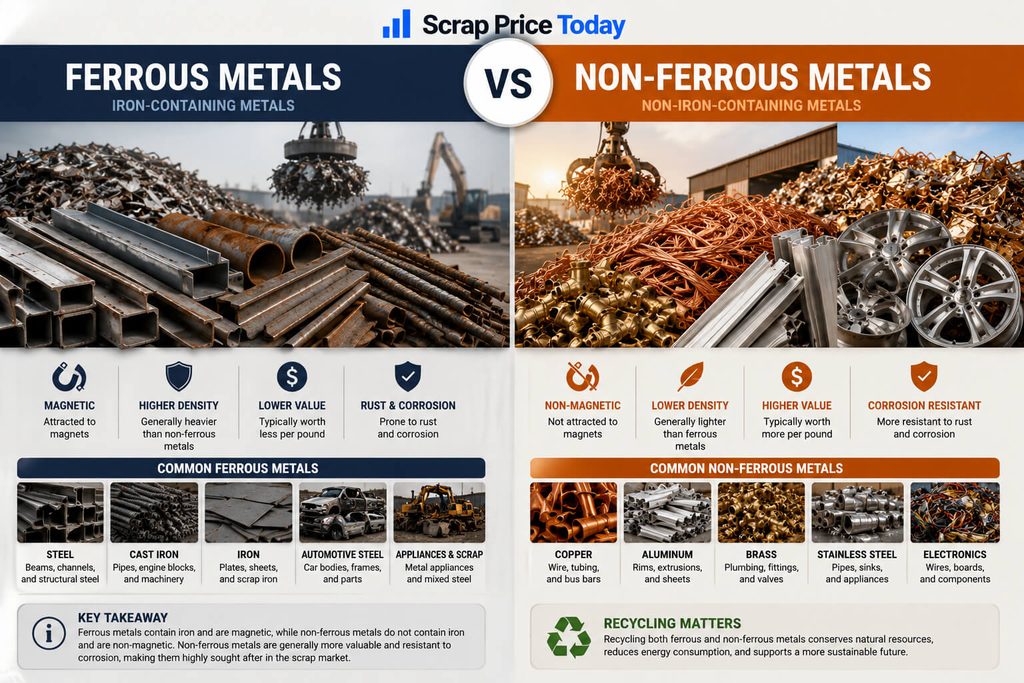
Ferrous metals contain iron and stick to a magnet; non-ferrous metals such as copper, aluminum, brass and lead do not. Ferrous scrap is cheap and sold by the ton, non-ferrous scrap is worth many times more and sold by the pound or kilogram, and stainless steel is the exception: iron-based, weakly magnetic or not at all, and priced with the non-ferrous side for its nickel.
Scrap Price Today editorial guide, checked against current exchange settlements, recycler grade specifications and mill buying programs. Figures are examples; today’s prices are on the live scrap price board.
Every scrap yard is really two businesses, and the split decides how your material is weighed, priced, processed and paid.
The magnet test and its exception
A magnet sticks to ferrous metal and not to non-ferrous metal, which is why every scrapper carries one. The exception is stainless steel.
The common 300-series grades (304 and 316) are non-magnetic or barely magnetic because of their nickel, and yards buy them on the non-ferrous side. The 400-series grades in cheap cutlery and some sinks are magnetic and pay little more than steel.
Why the prices are so different
Iron is the most abundant industrial metal and steel scrap arrives in enormous volumes from cars, buildings and machinery. Copper and nickel are scarce and costly to mine and refine.
The result is a gap of roughly 20 to 40 times per pound between copper and steel on a typical day. That gap is why ferrous is quoted per ton and non-ferrous per pound, and why the live board keeps the two sides in their own units.
Ferrous grades
- Heavy melting steel (HMS 1 and 2): thick plate, structural pieces and heavy machinery parts.
- Plate and structural: cut plate, beams and columns to a maximum size the mill can charge.
- Shredded: cars and appliances after the shredder and magnet.
- Busheling: clean new production offcuts, the premium grade.
- Cast iron: engine blocks, pipe and machine bases, bought separately.
- Light iron: appliances, sheet and roofing, the bottom of the ferrous board.
Non-ferrous grades
Copper is graded by purity and cleanliness, aluminum by alloy family, brass by type, lead by form, zinc by die cast or sheet, and stainless by series and nickel content. Each is sorted by hand and priced separately, which is why the non-ferrous side of a yard has bins where the ferrous side has a pile. The copper and aluminum guides cover the two biggest.
The two sides compared
| Ferrous | Non-ferrous | Stainless steel | |
|---|---|---|---|
| Measurement | Price per ton or tonne, vehicle weighed full and empty | Price per lb or kg, weighed by bin | Price per lb or kg, by series |
| Magnet test | Sticks firmly | Does not stick | Weak or none (300 series), sticks (400 series) |
| Typical price level | Lowest per pound, highest volume | 10 to 40 times steel by weight | Between aluminum and copper for 304 and 316 |
| Main grades | HMS, plate and structural, shredded, busheling, cast, light iron | Copper, aluminum, brass, lead, zinc | 304, 316, 430 |
| Processing route | Shear, bale or shred, then electric arc or basic oxygen furnace | Hand sort, then secondary smelter or refiner | Sorted by nickel content, melted with stainless scrap |
How each side is processed
Ferrous scrap is sheared, baled or shredded, then loaded by magnet into rail cars and trucks for an electric arc furnace or a basic oxygen furnace. Non-ferrous scrap is sorted, sometimes granulated or baled, and sold to a smelter, a refiner or, for the top grades, directly to a mill making new rod or sheet.
The higher the grade, the shorter the chain and the larger the share of the exchange price that reaches the seller.
What this means at the scale
- Ferrous loads are weighed by the vehicle; non-ferrous by the bin or bag.
- Check which unit your ticket uses: ton, tonne, pound or kilogram.
- Non-ferrous left in a ferrous load is paid at the ferrous price, so pull wiring, trim and fittings first.
- Ferrous left in a non-ferrous load downgrades it: steel screws in aluminum, clamps on copper, steel-cored cable.
Key numbers
- Electric arc furnaces, which run almost entirely on scrap, produce close to 30 percent of world steel, and the share is rising as mills decarbonise (World Steel Association).
- More than 600 million tonnes of steel scrap are recycled worldwide each year, making it the most recycled material by weight (Bureau of International Recycling).
- Stainless steel is typically 8 to 10 percent nickel in the 304 grade and around 10 to 14 percent in 316, which is what the non-ferrous price pays for (grade standards).
- North American yards quote ferrous per net ton of 2,000 pounds; most other markets quote per metric tonne, as shown on the country pages.
Questions people ask
My metal sticks to the magnet only a little. What is it?
Almost certainly stainless steel from the 300 series, which is weakly magnetic after it has been worked. Ask for the stainless price, not the steel price; the difference is large.
Is cast iron the same as steel scrap?
No. Cast iron has a much higher carbon content and melts differently, so yards buy it as its own grade. It is often paid a little more than light iron and a little less than heavy melt.
Why is my washing machine worth so little?
Because it is mostly light steel sheet, the bottom ferrous grade. The value is in the motor, the wiring harness and any copper pump, which pay far more if you remove them first.
Common mistakes
- Selling stainless steel as ordinary steel because it seemed magnetic.
- Leaving copper wiring and aluminum trim inside appliances and cars.
- Not asking whether the ferrous price is per net ton, gross ton or tonne.
- Putting cast iron in the light iron pile.
- Loading non-ferrous bins under the ferrous so they cannot be weighed separately.
Related guides
- Best Metals to Scrap: The metals and items that return the most per pound, and the ones not worth the trip.
- Copper Scrap Grades Explained: Bare bright, number 1, number 2, insulated wire and mixed copper, and why each pays differently.
- Scrap Metal Recycling Guide: How collected scrap becomes new metal, and why recycled supply matters to prices.
Check today’s numbers before you sell: the scrap price board, the price charts, the scrap value calculator and local rates on our scrap prices by country pages.
Frequently asked questions
My metal sticks to the magnet only a little. What is it?
Almost certainly stainless steel from the 300 series, which is weakly magnetic after it has been worked. Ask for the stainless price, not the steel price; the difference is large.
Is cast iron the same as steel scrap?
No. Cast iron has a much higher carbon content and melts differently, so yards buy it as its own grade. It is often paid a little more than light iron and a little less than heavy melt.
Why is my washing machine worth so little?
Because it is mostly light steel sheet, the bottom ferrous grade. The value is in the motor, the wiring harness and any copper pump, which pay far more if you remove them first.