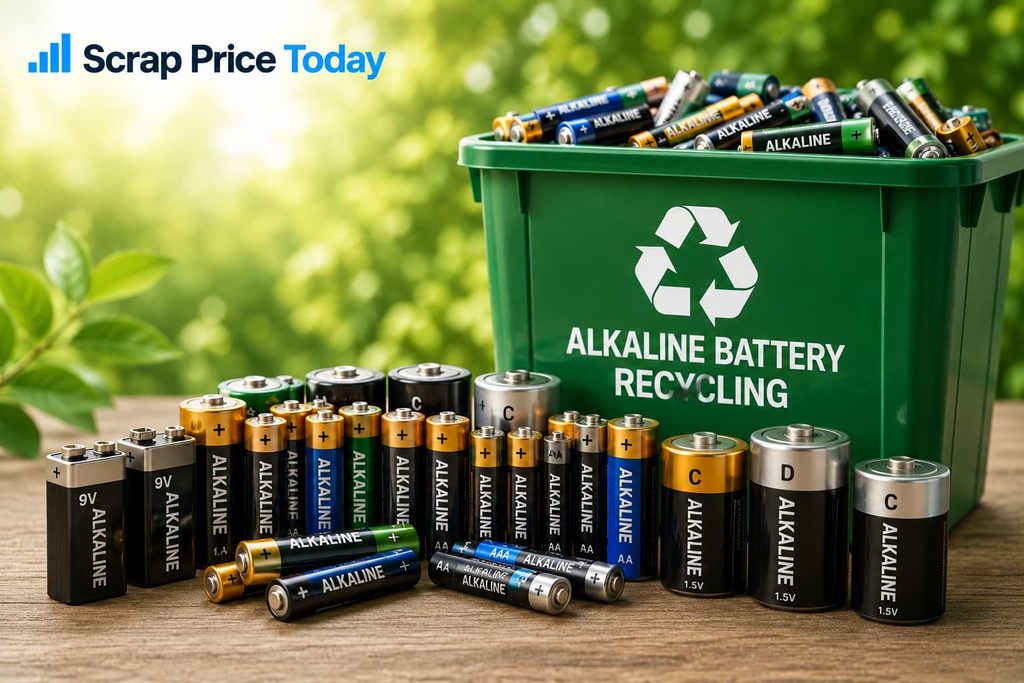
Throwing alkaline batteries in the trash is legal in most US states, because federal law removed their mercury decades ago, and modern AAs are classified as non-hazardous. California is the exception, where every battery is universal waste. Recycling them is still the better answer, with one honest caveat: alkaline recycling loses money, which is why it usually asks something of you. And a leaking battery is a genuine chemical hazard, whatever the trash rules say.
This is the biography of the most common battery on earth, from what is inside it to where it should end up.
What a AA is actually made of
About 85 percent of all batteries sold are alkaline. Each one is a small, tidy package of cheap materials.
| Component | Amount in a AA | Role | Worth recovering? |
|---|---|---|---|
| Measurement | Grams per cell and what each part does | ||
| Manganese dioxide | About 8.5 g | Cathode | Low value, abundant |
| Zinc | About 3.7 g | Anode | Recoverable, cheap |
| Steel casing | Several grams | The can itself | Yes, as ordinary steel |
| Potassium hydroxide | Small amount | Electrolyte | No, and it is the hazard |
| Brass pin, separator | Trace | Current collection | Incidental |
Nothing in that list is rare or precious. That single fact explains almost everything about how these batteries are treated.
The law that made the trash legal
Before the mid-nineties, alkaline batteries contained deliberately added mercury to suppress gassing. That made every AA a small mercury delivery to landfill.
A federal act passed in 1996 banned intentionally introduced mercury in alkaline and zinc-carbon batteries. From that date, new alkalines became federally non-hazardous, and the familiar advice that trash is acceptable was born with a specific legal birthday.
Two caveats survive it:
- California never adopted the trash rule. Every battery chemistry there is universal waste, and binning any battery is illegal.
- Old stock is different. Batteries from before the phase-out are hazardous waste, so a tin of ancient cells from a loft goes to a hazardous waste site, not the bin.
The white crust, and how to handle it
An alkaline battery dies by leaking. The white crust on old cells is potassium hydroxide creeping out, a strong alkali that causes chemical burns to skin and eyes.
- Gloves before touching anything. Even crusted residue is caustic when damp.
- Neutralise with a weak acid: a cotton bud of vinegar or lemon juice fizzes the deposit off device contacts.
- Finish with a dry wipe and fine abrasion on stubborn contacts.
- Bag the leaked battery and treat it as hazardous waste, whatever your state says about healthy ones.
- Remove batteries from anything stored long-term. Leaks kill more torches than flat cells ever do.
The recycling that loses money
Here is the candour rarely found on recycling pages, stated plainly in the industry’s own patent filings: waste alkalines have been essentially all landfilled because processing costs exceed the value of everything inside. Zinc and manganese are simply too cheap to pay for their own recovery.
That asymmetry shapes what you see as a consumer:
- Rechargeable battery drop-off is free, because producers fund it by law in much of the country.
- Alkaline recycling often is not: mail-in boxes and some programmes charge, because nobody upstream was paying.
- This is the exact inverse of the car battery, where the lead pays for the whole system, as our car battery page sets out.
The gap is now closing by law rather than economics. California’s producer-funded programme, live this year and covered on our battery disposal pillar, makes manufacturers fund collection for single-use cells too, and other states are drafting versions.
Where alkalines are recycled, the outputs are honest and modest: the steel cans return as ordinary scrap steel, and the zinc and manganese fraction goes to steelmaking additives or is blended into micronutrient fertiliser, both metals being plant nutrients.
The substitution that ends the question
A modern low-self-discharge rechargeable replaces hundreds of alkalines in the same device. For remotes, controllers, torches and toys, one charged set plus one spare ends the purchase cycle and the disposal question together.
The honest exceptions: smoke alarms should use exactly what the manufacturer specifies, and rarely used emergency devices suit long-shelf-life primaries. Everything else in a drawer full of AAs is a rechargeable use case.
Questions people actually ask
Can I throw AA batteries in the trash? In most states yes, legally, since the mercury ban. In California no, for any battery. Everywhere, a free retail drop-off box is one errand and the better answer.
Are old batteries from the attic safe to bin? No. Pre-ban cells contain mercury and are hazardous waste. Age is visible: paper-jacketed and rusted cells go to a hazardous waste site.
Is the white powder dangerous? Yes, it is caustic potassium hydroxide. Gloves on, neutralise with vinegar, and burns from handling it barehanded are a real emergency-room category.
Do alkalines go in the same box as phone batteries? Same retail box in most programmes, different rules: lithium cells get taped and bagged individually, alkalines only need 9V terminals taped.
Common mistakes
- Binning a leaking battery as if it were a healthy one.
- Cleaning crust barehanded, the most common way this chemistry hurts people.
- Bringing pre-ban batteries to a retail box meant for modern cells.
- Mixing loose 9Vs with other batteries untaped.
- Buying alkalines for high-drain devices, where they leak fastest and rechargeables win outright.
- Storing devices with batteries in through a hot loft summer.
Where this fits
The fire rules and drop-off map for every chemistry sit on the battery disposal pillar, the one battery system that pays you is on car battery recycling, and what happens when batteries reach a sorting plant anyway runs through how to recycle electronics.
Frequently asked questions
How do I dispose of alkaline batteries?
A retail drop-off box or hazardous waste site is the best answer everywhere. Trash is legal in most states because modern alkalines are mercury-free and federally non-hazardous, but California bans binning any battery, and leaking cells are hazardous waste in every state.
Why is it legal to throw alkaline batteries away?
A federal act in the mid-nineties banned intentionally added mercury in alkaline and zinc-carbon cells, and post-ban batteries are classified non-hazardous. The familiar trash advice dates precisely from that law, and it never applied in California.
Are old batteries from before the mercury ban dangerous?
Yes. Pre-ban alkalines contain deliberately added mercury and are hazardous waste, so a tin of ancient cells from a loft goes to a hazardous waste site rather than the bin or a retail box.
What is the white crust on old batteries?
Potassium hydroxide electrolyte creeping out, a strong alkali that causes chemical burns to skin and eyes. Wear gloves, neutralise device contacts with vinegar or lemon juice, and treat the leaked battery itself as hazardous waste.
Why does alkaline recycling sometimes cost money?
Because it loses money: processing costs exceed the value of the zinc, manganese and steel inside, a fact stated plainly in the industry's own patent filings. Rechargeable collection is producer-funded by law; single-use collection historically was not.
Is that changing?
Yes, by law rather than economics. California's producer-funded programme now covers single-use cells, making manufacturers pay for collection, and several states are drafting similar schemes, which is why free alkaline drop-off keeps getting easier to find.
What do recycled alkaline batteries become?
Modest, honest products. The steel cans return as ordinary scrap steel, and the recovered zinc and manganese go into steelmaking additives or micronutrient fertiliser, since both metals are plant nutrients.
What is inside a AA battery?
About 8.5 grams of manganese dioxide, 3.7 grams of zinc, a steel casing, a brass pin and potassium hydroxide electrolyte. Nothing rare or precious, which is exactly why the recycling economics are so thin.
Should I switch to rechargeables?
For almost everything, yes. A modern low-self-discharge rechargeable replaces hundreds of alkalines in remotes, controllers and torches. The exceptions are smoke alarms, which should use exactly what the manufacturer specifies, and rarely used emergency devices.
Do alkaline and lithium batteries go in the same drop-off box?
Usually the same retail box with different preparation: lithium cells get terminals taped and individual bags, alkalines only need tape on 9V terminals. Damaged or swollen batteries of any chemistry go to hazardous waste instead.