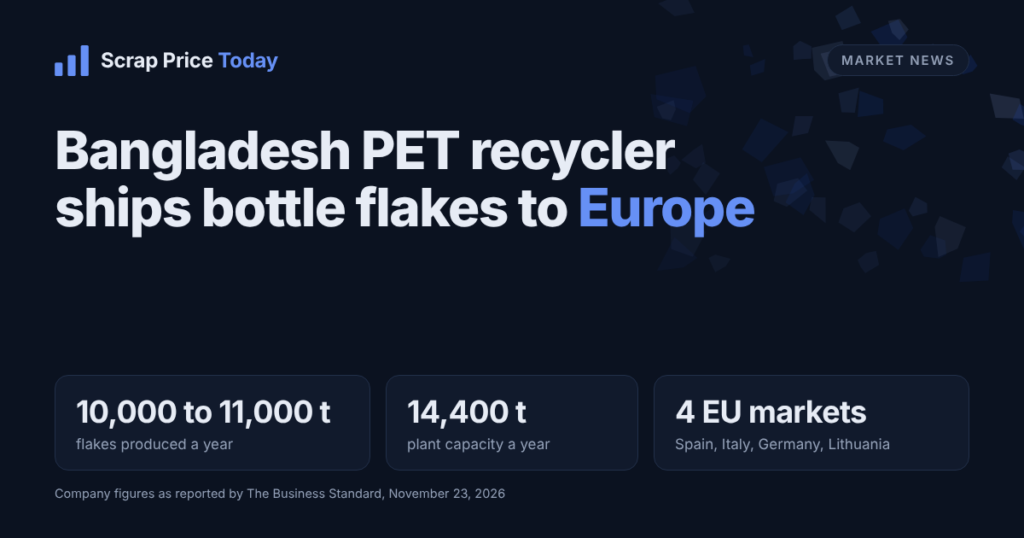
A PET bottle recycler in Sitakunda, Chattogram, says it exports everything it makes: about 10,000 to 11,000 tonnes of recycled flakes a year, sold to buyers in four European countries. The Business Standard reported the figures on November 23, 2026. This article sets out what was reported, what the numbers work out to, and why the European route is unusual for a Bangladeshi flake exporter.
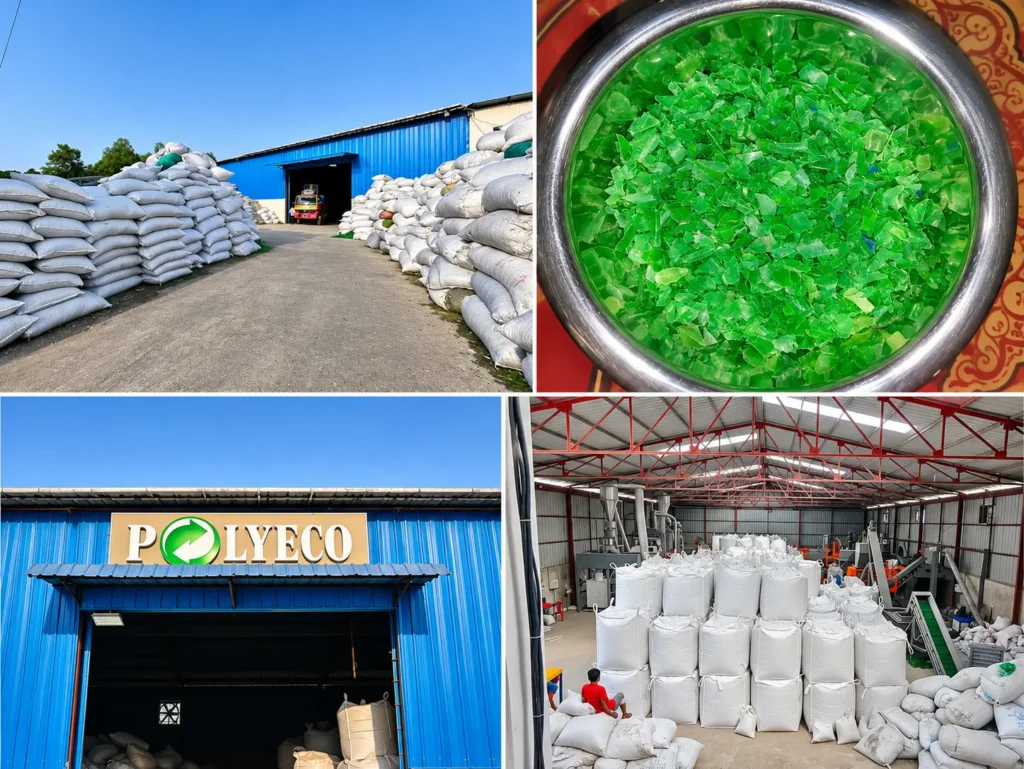
What was reported
The company is Polyeco Recycling Industries. According to the Bangla edition of The Business Standard, its founder received the Best Green SME Business Entrepreneur of the Year award at the 13th National SME Product Fair.
The report’s main points, all supplied by the company:
- Start: production began on February 22, 2022, after about a year of preparation.
- Money: the business started with about Tk 5 crore, part of it bank loans. Its capital has grown to about Tk 60 crore.
- Output: 10,000 to 11,000 tonnes of recycled PET flakes a year, against a capacity of 14,400 tonnes.
- Sales: all output is exported and none is sold in Bangladesh. Expected export earnings for the year are about Tk 60 crore.
- Buyers: companies in Spain, Italy, Germany and Lithuania, which use the flakes for packaging, textile fiber and foam products.
- Workforce: about 100 people.
This site has not verified these figures independently. They are the company’s statements as carried by the newspaper.
The numbers at a glance
| Item | Reported figure | In plain terms |
|---|---|---|
| Starting investment | About Tk 5 crore | 50 million taka, about $400,000 |
| Capital in 2026 | About Tk 60 crore | 600 million taka, about $4.8 million |
| Expected export earnings | About Tk 60 crore for the year | About $4.8 million |
| Annual output | 10,000 to 11,000 tonnes | PET flakes, non-food grade |
| Plant capacity | 14,400 tonnes a year | Output is about 69 to 76 percent of capacity |
| Export markets | 4 countries | Spain, Italy, Germany, Lithuania |
| Solar plant | 239 kW | Under construction, due in November 2026 |
Dollar figures use 124.43 taka to the US dollar, the rate in this site’s exchange feed (open.er-api.com) fetched on November 23, 2026. The capacity percentage is this site’s arithmetic from the two reported tonnages.
How the plant turns bottles into flakes
The process described in the report follows the standard route for PET, the plastic marked with the number 1. The resin codes are explained in the plastic numbers guide.
- Collection. Used bottles come in through a nationwide network of scrap dealers and independent collectors.
- Hot wash. Bottles are washed with steam and hot water at about 90 degrees Celsius to remove labels, glue and dirt.
- Sorting. Automatic optical sorting is used to keep quality consistent.
- Output. The product is hot-washed clear PET flake.
The report adds that process water is treated and reused, and that the plant has started harvesting rainwater. A broader walk through sorting and washing lines is in how recycling works.
One detail matters for buyers. The company’s flakes are non-food grade. The report lists packaging, fiber and foam as the end uses.
The plant on the map
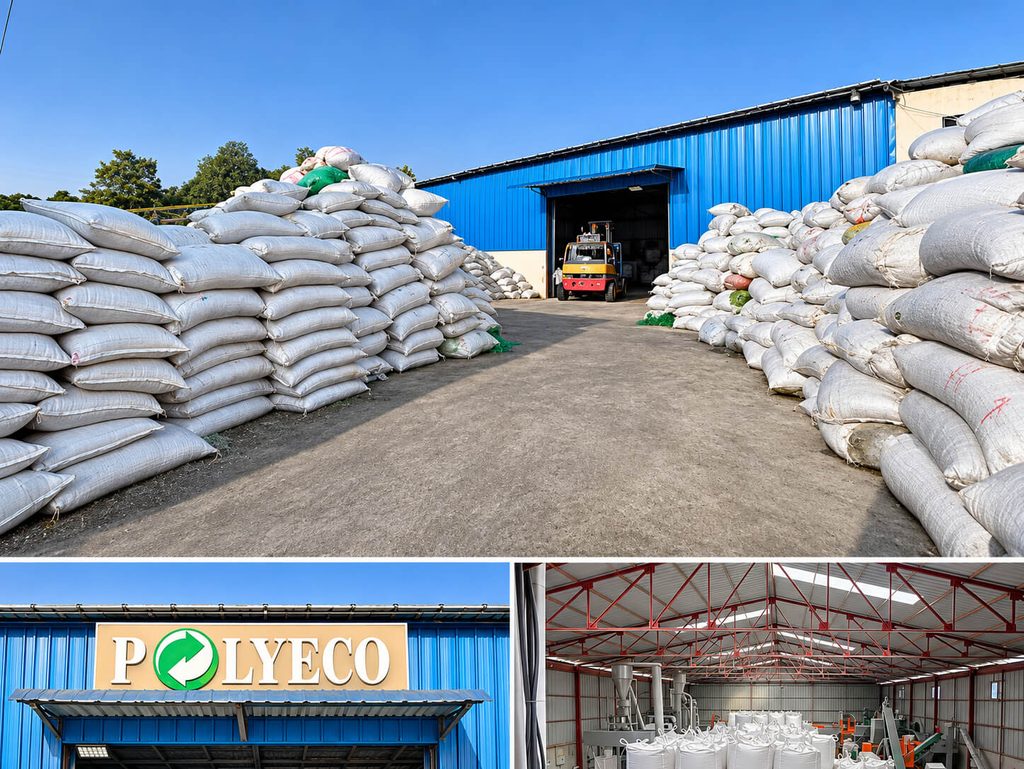
The plant is in Sitakunda, in Chattogram district. Visitor photos of the site are on its Google Maps listing, linked under the map.
View the plant and its photos on Google Maps
What the figures imply per tonne
Dividing the expected export earnings by the annual output gives a rough revenue figure:
- Tk 60 crore over 11,000 tonnes is about 54,500 taka a tonne, or about $440.
- Tk 60 crore over 10,000 tonnes is 60,000 taka a tonne, or about $480.
Treat this as back-of-envelope arithmetic, not a market price. The report does not say that the earnings and the tonnage cover the same twelve months, and it gives no price per tonne. No buyer or price-reporting agency is quoted.
Why the European route stands out
Bangladeshi PET flake exports have mostly gone to Asia. An opinion article in The Business Standard dated December 7, 2024, written by the head of a public-private dialogue platform, said shredders produce flakes for export mainly to India, China and South Korea. It put national PET flake exports at about $30.22 million in fiscal year 2022 to 2023, citing Export Promotion Bureau statistics.
Against that backdrop, two things about this exporter are different.
The destinations. All four named markets are in the European Union. For scale, the company’s expected earnings of about $4.8 million equal roughly one sixth of that national figure, though the two numbers come from different years and should not be read as a market share.
The paperwork. The report says the company holds a RecyClass certification. RecyClass describes its recycled content scheme as an audit of the traceability of recycled plastic through each step of the value chain, with third-party verification. The scheme is based on ISO 22095, the chain-of-custody standard, and EN 15343:2007, the European standard on recycled plastics traceability. The founder told the newspaper that buyers focus on quality and transparency.
European demand for recycled plastic also has a legal floor. Directive (EU) 2019/904, the Single-Use Plastics Directive, requires 25 percent recycled plastic in PET beverage bottles from 2025 and 30 percent in all plastic beverage bottles from 2030, according to the European Commission. The same directive sets a separate collection target for plastic bottles of 77 percent by 2025 and 90 percent by 2029.
A caution belongs here. Those targets cover beverage bottles, and this company’s flakes are non-food grade. The report does not link its sales to the directive, and neither does this article.
The constraints the wider sector reports
The same December 2024 article lists problems that an exporter of this kind has to work around:
- Feedstock. Small PET flake exporters face an acute shortage of raw material.
- Imports. Plastic waste imports are not allowed, and entrepreneurs disagree on whether that should change.
- Finance. Small exporters without Department of Environment certification cannot get institutional bank financing.
- Incentive. The sector receives a 6 percent cash incentive.
That article also gives a national picture: about 821,250 tonnes of plastic waste a year, of which 293,825 tonnes, or 36 percent, is recycled. The same piece records sector claims of far higher recycling rates, so the percentage is disputed. Collection totals and counted recycling often differ, a point covered in what actually gets recycled.
What to watch next
Three plans in the report will show whether the model keeps scaling.
- Solar power. A 239 kW solar plant is due for completion in November 2026. The company’s stated aim is to meet all of its electricity needs from solar.
- Moving up the chain. The company is considering making packaging products, such as bottles and films, from recycled plastic. It says this would need large investment and that it is reviewing demand and policy first.
- Capacity. Output sits below the 14,400 tonne capacity. Bottle supply, the constraint the sector itself names, is one factor to watch.
For readers sorting bottles at home, the practical side of all this starts with the recycling guide.
Sources
- The Business Standard, Bangla edition: report on Polyeco Recycling Industries, published November 23, 2026. Source for every company figure in this article.
- The Business Standard: opinion article on plastic recycling policy, published December 7, 2024. Source for the national export, waste and policy points. It is an opinion piece and says so.
- RecyClass: recycled content certification page, read November 23, 2026.
- European Commission: single-use plastics page, read November 23, 2026.
All conversions and per-tonne figures are this site’s own calculations from the reported numbers.