Every cut on a piece of scrap is a grade decision. Cutting solder joints off copper pipe moves it from $5.48 to $5.95 a pound. Cutting steel off irony copper moves it from $3.68 to $5.95. A $2 cutting disc lasts through dozens of those cuts, which is why this is the highest-return equipment in scrap and also why the expensive tools are usually unnecessary.
Price the cut, not the tool
Tool guides rank products. That is the wrong frame here, because the question is not which grinder is best. It is which cuts pay, and by how much.
Every cut does one of three things:
Moves material up a grade. Removing solder, steel, brass or coating that is holding a piece in a lower grade.
Separates two grades that are stuck together. An aluminium radiator with steel brackets is two materials at two rates.
Makes something fit or handle. Cutting to length for transport, which pays nothing directly but can make a load viable.
Only the first two earn money. The rest is logistics.
What each cut is worth
At current rates on this site:
| Cut | From | To | Gain per lb |
|---|---|---|---|
| Steel off irony copper | $3.68 | $5.95 | $2.27 |
| Solder joints off pipe | $5.48 | $5.95 | $0.47 |
| Brass fittings off pipe | $5.48 | $5.95 | $0.47 |
| Tanks off an aluminium radiator | dirty grade | prepared grade | material change |
| Steel brackets off aluminium | irony aluminium | clean aluminium | several times |
The irony copper cut is the one to internalise. At $2.27 a pound of gain, a 30 lb motor or a stack of copper with steel attached represents $68 of value recoverable with a grinder in under an hour. Nothing else in the sorting workflow pays like it.
The pipe cuts are smaller per pound but faster per piece, and they apply to almost every plumbing load.
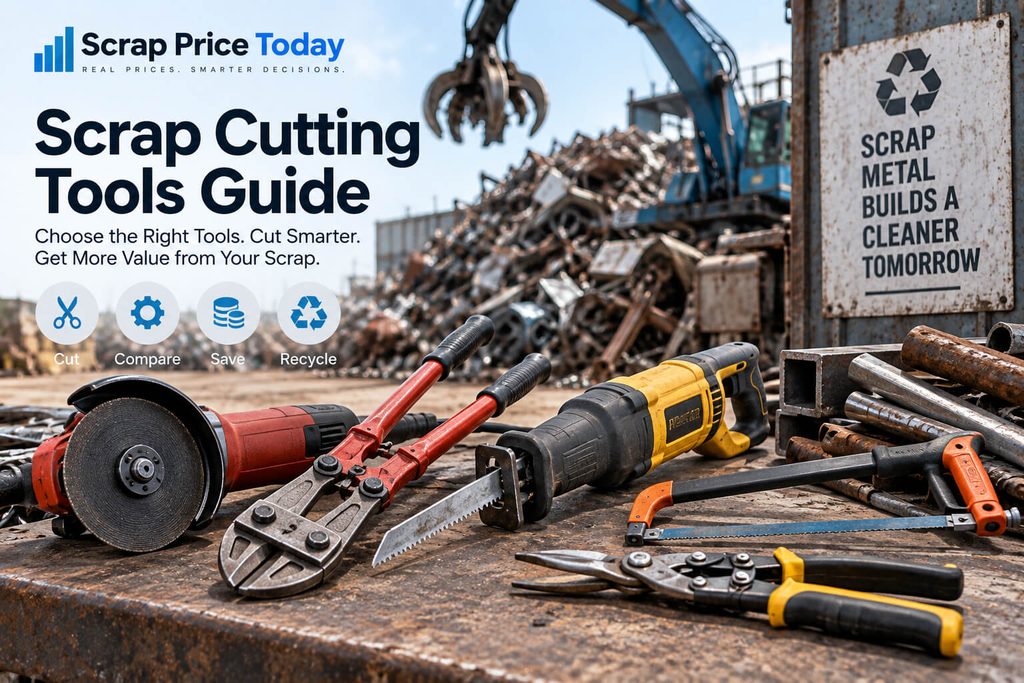
The three tools that cover almost everything
| Tool | Cost | Consumable | What it is for |
|---|---|---|---|
| Angle grinder | $40 to $90 | Cut-off discs, $1 to $3 each | Fittings, brackets, thin steel, brazed joints |
| Reciprocating saw | $50 to $120 | Metal blades, $3 to $8 | Pipe, tube, cutting to length |
| Bolt or cable cutters | $20 to $60 | none | Cable, light bar, wire rope |
Most working scrappers own the first two. They do different jobs and neither replaces the other: the grinder is for removing things, the saw is for cutting through things.
A pipe cutter at $15 to $30 is worth adding if you handle plumbing copper regularly, because it gives clean square ends faster than either and wastes no metal.
Does the consumable cost eat the gain?
Run the arithmetic, because it decides where cutting is worth doing.
A cut-off disc at $1 to $3 makes dozens of cuts on light material before it wears down. On copper the gain per cut is measured in dollars, so the disc cost is negligible.
Where it stops paying:
Light steel and cast iron. The grade gain per cut is pennies and you may go through discs quickly on hardened material. Not worth it.
Anything where the cut takes longer than the gain justifies. A brazed joint that needs five minutes of grinding on a 2 lb piece of number 2 copper earns about $0.94. Your time is worth more.
On copper and aluminium, almost never. The metal values are high enough that the consumable is a rounding error.
Cutting for grade, worked
Three real cases from material most people handle.
Copper pipe with fittings. Cut the soldered joints and brass fittings off and the pipe moves from number 2 to number 1. On a 20 lb load that is about $9.40 for perhaps fifteen minutes of work. The copper pipe page covers what qualifies as clean.
An aluminium radiator. Whole with plastic tanks it grades dirty and you are paid for the core only. With the tanks removed it grades as prepared aluminium. A typical 12 lb car radiator is the standard worked example, and heavy truck units run 40 to 80 lb where the same preparation matters more.
Electric motors and irony copper. Steel housing off, copper windings out, and material moves from $3.68 to $5.95. This is the highest-value cutting work available and it is why a grinder pays for itself on the first decent load.
What not to cut
Four cases where cutting costs you money.
Anything with core value. An alternator cut open is scrap at $10 to $12; intact it is a core at $18 to $80. The same applies to starters, ECUs and hybrid packs. Test for core eligibility before you reach for a tool, using the checks in the alternator guide.
Sealed units you cannot identify. Cutting into something to find out what is inside frequently destroys the reason it was valuable.
Catalytic converters. Cutting one open produces loose substrate that many buyers will not touch, and the unit is priced by its stamped code intact.
Anything you have not weighed. Cutting changes what you are holding, and if you did not record the before state you cannot check the ticket afterwards.
Safety, briefly and seriously
Not a formality. Cutting scrap produces specific hazards.
Eye protection, always. Grinding throws hot metal fragments at speed.
Know what is inside before you cut. Pressurised vessels, sealed containers, fuel lines and anything that held a flammable or a refrigerant. Cutting into a sealed cylinder is how people are seriously injured.
Never cut into a fuel tank, cleaned or not, without proper preparation. Residual vapour is the hazard, not the liquid.
Watch for coatings. Galvanised steel produces zinc fumes when cut or ground, and painted or plated material can produce worse. Ventilation matters.
High-voltage components on hybrids and EVs are not a cutting job at all. They go to a specialist, as covered in the hybrid battery guide.
Torches and plasma
Worth addressing because people ask.
A cutting torch or plasma cutter earns its place on heavy plate and structural steel in volume. Below that, an angle grinder and a reciprocating saw cover everything a household or small-business scrapper encounters, at a fraction of the cost and with no gas handling.
Two cautions if you go that route. Cutting with heat can affect grade on some materials, and burning through coated or painted material produces fumes that a grinder would not. Neither is a reason to avoid a torch on structural steel; both are reasons not to use one on non-ferrous.
The order that saves time
Sort first, cut second. Cutting before you know what you have means cutting things that did not need it.
Batch identical cuts. Doing all the pipe joints in one session beats switching tools per piece.
Keep the removed material. Steel brackets, brass fittings and lead ends are all separate tickets rather than waste. The sorting tools guide covers keeping them apart, and a mixed pile is paid at the lowest grade present.
Weigh before and after on anything you are unsure about, so you learn which cuts are worth repeating.
Around the world
The tools are identical everywhere; the arithmetic follows local grade spreads.
The gap between clean and irony grades runs a similar proportion in most markets, so the cut that pays here pays there. What changes is whether a buyer recognises the distinction at all: where a yard grades everything as mixed, careful cutting earns nothing because nobody is paying for it.
Ask which grades a buyer actually separates before spending the afternoon with a grinder. The country pages set out local grade names and what each market pays.
Questions people actually ask
Which cut is worth the most?
Removing steel from irony copper, at $3.68 to $5.95 a pound, a gain of $2.27. Nothing else in preparation comes close per pound of material handled.
Grinder or reciprocating saw?
Both, because they do different jobs. The grinder removes fittings, brackets and brazed joints; the saw cuts through pipe and tube and cuts to length. Most working scrappers own each.
Does cutting fittings off pipe really change the price?
Yes. Pipe with solder joints and brass fittings grades as number 2 at $5.48; clean it grades number 1 at $5.95. On a 20 lb load that is about $9.40 for around fifteen minutes.
When does the disc cost exceed the gain?
On light steel and cast iron, where the grade gain per cut is pennies. On copper and aluminium it effectively never does, because the metal values are high enough that a $1 to $3 disc is a rounding error.
What should I never cut?
Anything with core value, such as an alternator, starter or ECU, because intact they are worth several times their scrap value. Also catalytic converters, sealed units you cannot identify, and any pressurised or fuel-bearing vessel.
Is a plasma cutter worth buying?
For heavy plate and structural steel in volume, yes. For household and small-business scrap, an angle grinder and a reciprocating saw cover everything at far lower cost and without gas handling.
Should I cut the tanks off an aluminium radiator?
Yes. Whole with plastic tanks it grades dirty and you are paid for the core only; with tanks removed it grades as prepared aluminium. A 12 lb car radiator is the standard example and heavy truck units run 40 to 80 lb.
What safety gear do I actually need?
Eye protection without exception, and ventilation when cutting galvanised or coated material because of zinc fumes. Know what is inside anything sealed before cutting, and never cut a fuel tank without proper preparation.
Do I need to keep the pieces I cut off?
Yes. Steel brackets, brass fittings and lead terminal ends are separate tickets, not waste. Keeping them apart is worth more than the time it costs.
Grade prices quoted are this site’s live copper rates at the time of writing and move daily. Tool and consumable prices are indicative 2026 street prices. Cutting scrap involves real hazards including fumes, hot fragments and sealed vessels; this is general information rather than a safety procedure.
Frequently asked questions
Which cut is worth the most?
Removing steel from irony copper, at $3.68 to $5.95 a pound, a gain of $2.27. Nothing else in preparation comes close per pound of material handled.
Grinder or reciprocating saw?
Both, because they do different jobs. The grinder removes fittings, brackets and brazed joints; the saw cuts through pipe and tube and cuts to length. Most working scrappers own each.
Does cutting fittings off pipe really change the price?
Yes. Pipe with solder joints and brass fittings grades as number 2 at $5.48; clean it grades number 1 at $5.95. On a 20 lb load that is about $9.40 for around fifteen minutes.
When does the disc cost exceed the gain?
On light steel and cast iron, where the grade gain per cut is pennies. On copper and aluminium it effectively never does, because the metal values are high enough that a $1 to $3 disc is a rounding error.
What should I never cut?
Anything with core value, such as an alternator, starter or ECU, because intact they are worth several times their scrap value. Also catalytic converters, sealed units you cannot identify, and any pressurised or fuel-bearing vessel.
Is a plasma cutter worth buying?
For heavy plate and structural steel in volume, yes. For household and small-business scrap, an angle grinder and a reciprocating saw cover everything at far lower cost and without gas handling.
Should I cut the tanks off an aluminium radiator?
Yes. Whole with plastic tanks it grades dirty and you are paid for the core only; with tanks removed it grades as prepared aluminium. A 12 lb car radiator is the standard example and heavy truck units run 40 to 80 lb.
What safety gear do I actually need?
Eye protection without exception, and ventilation when cutting galvanised or coated material because of zinc fumes. Know what is inside anything sealed before cutting, and never cut a fuel tank without proper preparation.
Do I need to keep the pieces I cut off?
Yes. Steel brackets, brass fittings and lead terminal ends are separate tickets, not waste. Keeping them apart is worth more than the time it costs.